
Why hair falls out and what to do about it
Losing 50–100 hairs a day is normal. What's not normal is a hairline that keeps moving, a crown that thins out, or a pillow that tells you more than you want to know. If that's where you are, the first useful step is understanding why it's happening — because the fix depends on the cause.
The main cause: DHT sensitivity
For most men, hair loss is androgenetic — inherited sensitivity of hair follicles to DHT, a byproduct of testosterone. DHT gradually shrinks sensitive follicles: hairs grow back thinner and shorter each cycle, until the follicle stops producing visible hair at all.
Two things matter here. First, it's progressive — follicles miniaturise over years, and the earlier you act, the more there is to save. Second, a follicle that has thinned is not necessarily dead. That's why acting at the root level works, and why waiting is the most expensive strategy.
Other causes worth ruling out
- Stress and recovery debt. Intense stress, illness, or crash dieting can push a large share of follicles into the shedding phase at once. This kind of loss is usually diffuse and reversible once the trigger passes.
- Deficiencies. Low iron, vitamin D, zinc, or chronically poor protein intake show up in your hair before you feel them elsewhere.
- Scalp condition. Chronic irritation, excess sebum, and inflammation create a poor environment for growth. Healthy hair needs healthy skin under it.
If your hair loss is sudden, patchy, or comes with scalp pain or skin changes — see a dermatologist first. That pattern has different causes and needs a diagnosis, not a routine.
What actually helps
The market's default answer is minoxidil: it works for many men, but it's a lifetime commitment with a reputation that makes a lot of men hesitate. The good news is that the evidence base for gentler approaches has grown seriously in the last decade.
- Multi-active serums. Ingredients like Redensyl, Capixyl, Procapil, and caffeine target the follicle from different angles: stimulating the growth phase, improving anchoring, countering DHT locally. One active is a start; a combination is a strategy.
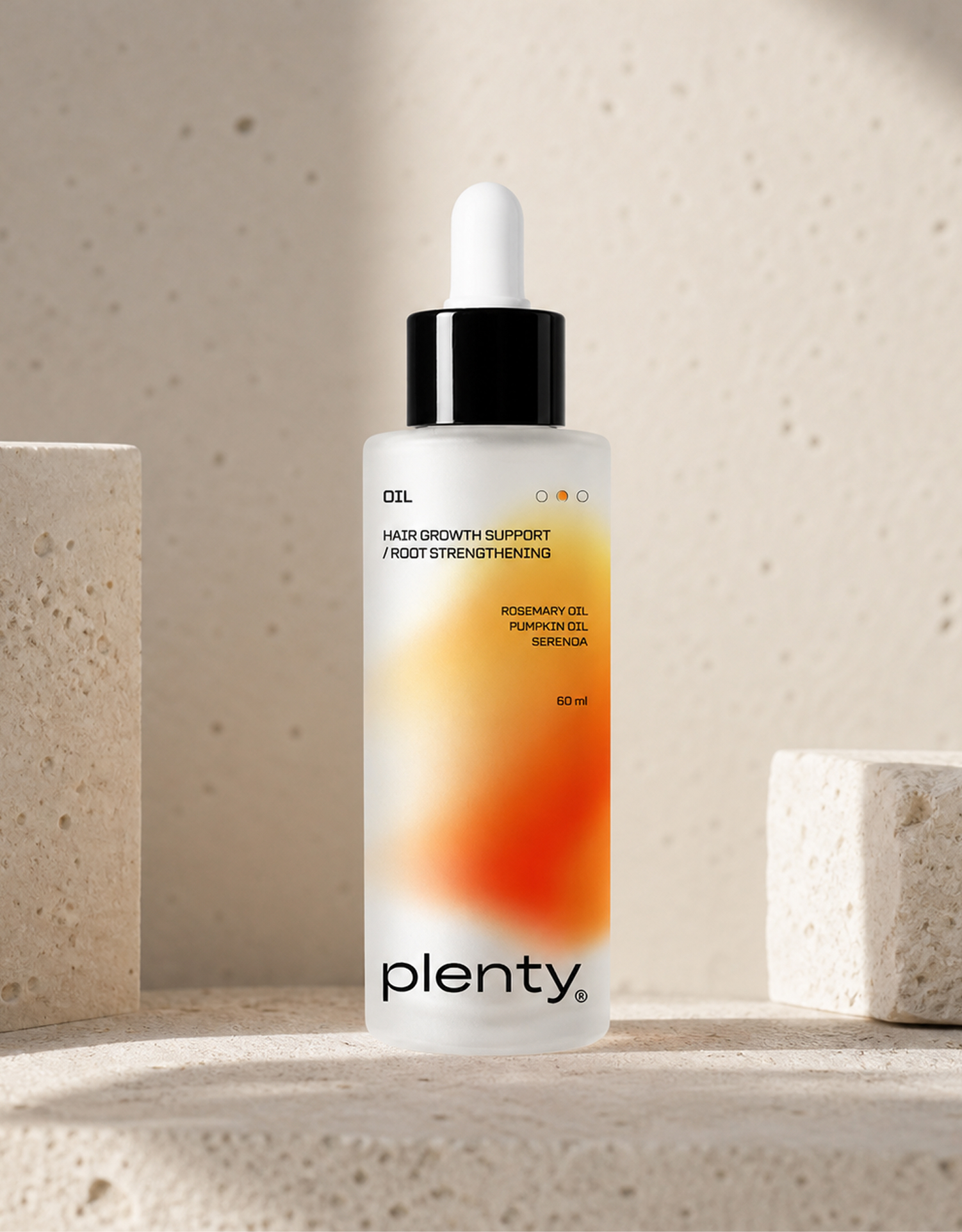
- Plant-based DHT modulation. Saw palmetto (Serenoa) and pumpkin seed extracts help reduce DHT activity at the scalp level — the same mechanism as pharmaceutical blockers, applied more gently.
- Microneedling. One of the best-supported at-home methods: tiny channels in the scalp stimulate circulation and dramatically improve how well actives reach the follicle.
- Scalp nourishment. Oils like rosemary have shown real results in comparative studies, supporting circulation and follicle health between treatments.
The part nobody wants to hear
None of it works in two weeks. Hair grows in cycles measured in months, so any honest routine is judged at week 14, not day 10. Consistency beats intensity: one millilitre of serum daily does more than a heroic weekend of everything at once.
Plenty is a system built exactly for this — proven actives, applied right, designed for men.